
Home / Reviews / Head-to-head
Google Nest Cam Indoor (3rd Gen) vs Ring Indoor Cam 4K: Which Should You Buy?

Affiliate note: Bestindoorcam.com may earn a commission if you buy through a store link. That does not change which camera we prefer. Read how affiliate links and ads work and how we review.
Google Nest Cam Indoor (3rd Gen) vs Ring Indoor Cam 4K: Which Should You Buy?
Overview
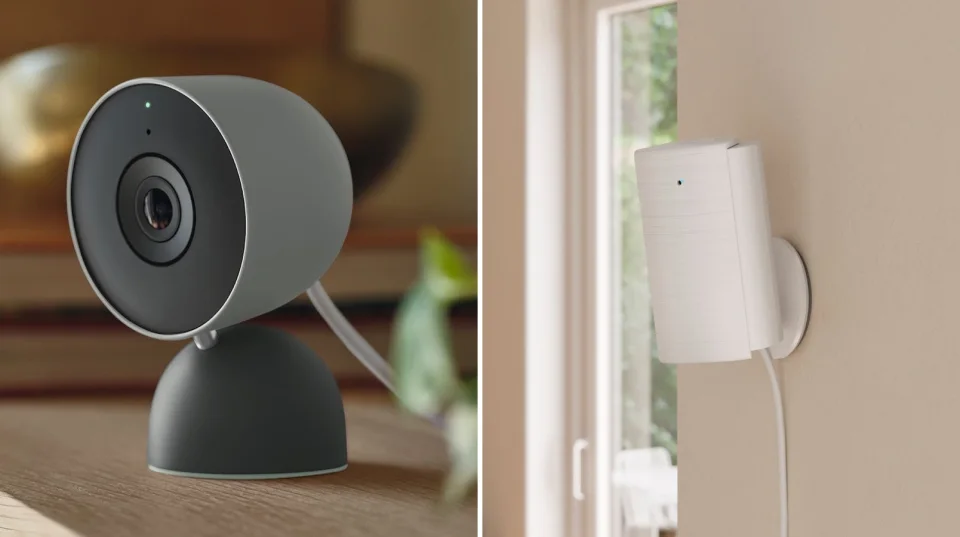
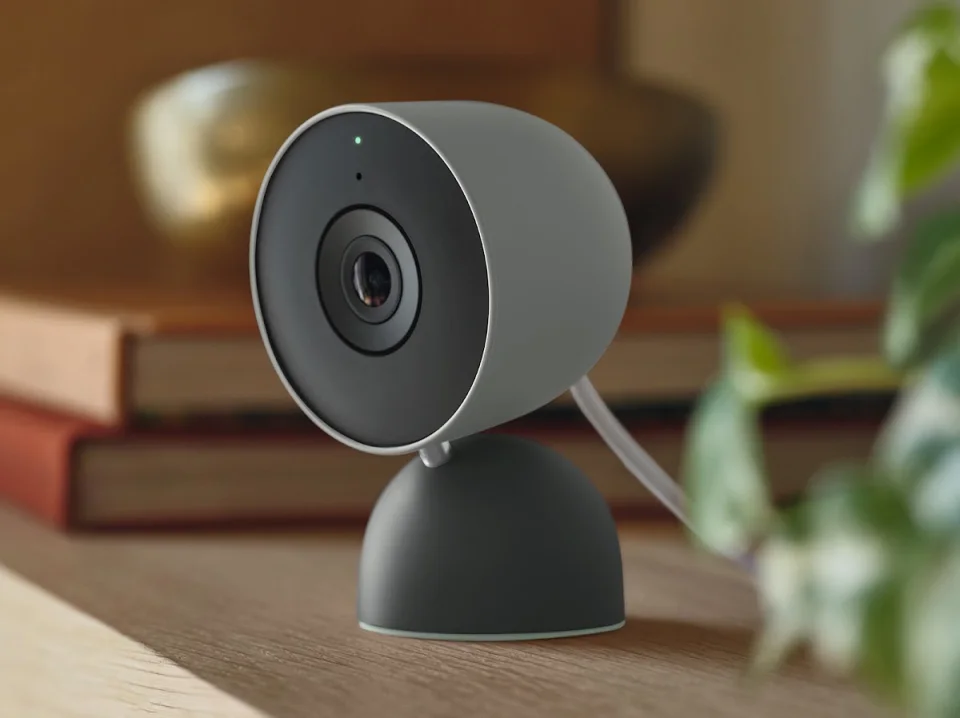
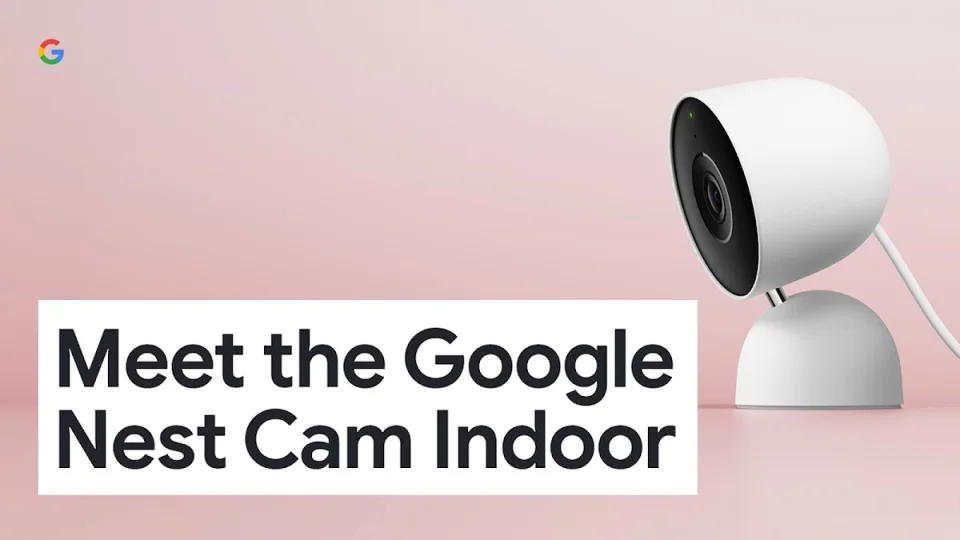
The Nest Cam Indoor (wired, 3rd gen), launched in October 2025, is Google's first 2K indoor camera: 2K HDR video, a 152° diagonal field of view, and Google's new Gemini-powered smart features. It runs only in the Google Home app — not the old Nest app — and like every Nest camera it has no local storage at all. If you want the deep dive, our full review of the Nest Cam Indoor (wired, 3rd gen) walks through the camera on its own.
The Ring Indoor Cam 4K, launched in October 2026, is Ring's first indoor 4K camera: true 4K (3840×2160) with Auto HDR, up to 10x Enhanced Zoom, Wi-Fi 6, and a detachable lens cover in the box. Our full Ring Indoor Cam 4K review covers it in detail, and if you are deciding inside the Ring family, our Ring Indoor Cam 4K vs Ring Indoor Cam Plus comparison sorts out whether the 4K jump is worth it over the 2K model.
Comparing them head to head is really a comparison of two philosophies. Nest puts its intelligence in the cloud (Gemini event search, detailed descriptions) and its smarts on paper — a wider view and stronger night-vision specs for the price. Ring puts its money into pixels — the sharpest image of any Ring indoor camera — and physical privacy hardware. The rest comes down to which smart home you already live in.
Full spec comparison
| Spec | Google Nest Cam Indoor (3rd Gen) | Ring Indoor Cam 4K |
|---|---|---|
| Video resolution | 2K HDR (2560 × 1440), up to 30 fps, H.264 + H.265 | 4K (3840 × 2160) with Auto HDR (frame rate not published by Ring) |
| Field of view | 152° diagonal | 115° horizontal / 60° vertical (no diagonal figure published) |
| Digital zoom | Up to 6x | Up to 10x Enhanced Zoom |
| Night vision | Up to 15 ft (4.5 m); 2 high-power 850 nm IR LEDs; HDR night vision | True colour in low light; crisp black-and-white in near darkness (no distance or LED count published) |
| Audio | Full-duplex 2-way audio with noise cancellation | Two-way talk with advanced noise cancellation |
| Siren | None listed in Google's official specs | Remote-activated security siren |
| Motion detection | On-device ML; intelligent alerts for person, animal, vehicle | Advanced Motion Detection with customisable motion zones |
| Privacy features | RGB status LED shows when streaming/recording; encrypted video | Detachable lens cover in the box (blocks view, muffles mic — disable the mic in the app for full audio privacy); Privacy Zones |
| Power | Attached 10 ft (3 m) USB-C cable + 7.5W USB-C adapter (included) | 2 m USB-A to USB-C cable + 10W adapter (5V 1.5A); 3 m cable sold separately; PoE available (sold separately) |
| Wi-Fi | 802.11ac-ready, dual-band 2.4 GHz / 5 GHz, Bluetooth Low Energy | Dual-band Wi-Fi 6 (2.4 GHz / 5 GHz) |
| Internet speed needed | Google publishes bandwidth guidance rather than one minimum (2K streaming is the heavier task) | Min 15 Mbps upload recommended; at least 20 Mbps for the best 4K experience |
| Local storage | None — cloud only | None — cloud only (no microSD slot listed) |
| Free video history | 6 hours of event video previews (10-second clips) | None — live view, real-time notifications and two-way talk only; no reviewing or saving without a plan |
| Subscription | Google Home Premium: Standard $10/mo or $100/yr (30 days event history); Advanced $20/mo or $200/yr (60 days + 10 days of 24/7 continuous + Gemini search and event descriptions). One plan covers all Nest cameras. | Ring subscription required to review, save or share recordings (up to 180 days of video history on a compatible plan per ring.com). Current plan pricing on ring.com — not stated on the product page checked. |
| App | Google Home app + free Google Account (not compatible with the Nest app or home.nest.com) | Ring app |
| Smart-home ecosystem | Google Home: Nest displays, Google TV Streamer, Pixel Tablet | Alexa: Echo devices, Fire TV |
| Dimensions | 3.9 × 2.5 × 2.2 in (98.5 × 64 × 56.9 mm); 14.1 oz (393 g) with cable | 5.0 × 5.0 × 9.85 cm |
| Colours | Snow; Hazel (US only); Berry (US only) | White, Black |
| Operating temperature | 32°F to 104°F (0°C to 40°C) | −20.5°C to 48.5°C |
| Security / updates | On-device ML, secure boot, automatic security updates, 128-bit AES with TLS/SSL | One-year limited warranty; software security updates for at least 4 years |
| Price (USD) | $129.99 (Google Store buy box; see note below) | $99.99 (ring.com US) |
Specs verified against store.google.com and ring.com, Oct 2026. Price note: Google's own store page showed $129.99 in the buy box on 2026-10-18 while the same page's FAQ comparison table still lists $99.99 (the launch price) — $129.99 is the current figure; re-check before buying. Field-of-view bases differ between the two vendors (diagonal vs horizontal/vertical) and Ring publishes no frame rate or IR distance, so those numbers can't be compared one-to-one.
Key differences
Resolution vs field of view. This is the core trade-off. Ring's 4K sensor delivers roughly twice the pixels of Nest's 2K one, and Ring's 10x Enhanced Zoom genuinely out-reaches Nest's 6x digital zoom on paper. But Nest's 152° diagonal view is meaningfully wider — if one camera has to cover a whole living room or watch a large play area, the Nest frame simply fits more of the room. (Note the asterisk: Google quotes diagonal degrees, Ring quotes horizontal/vertical, so treat the comparison as approximate.)
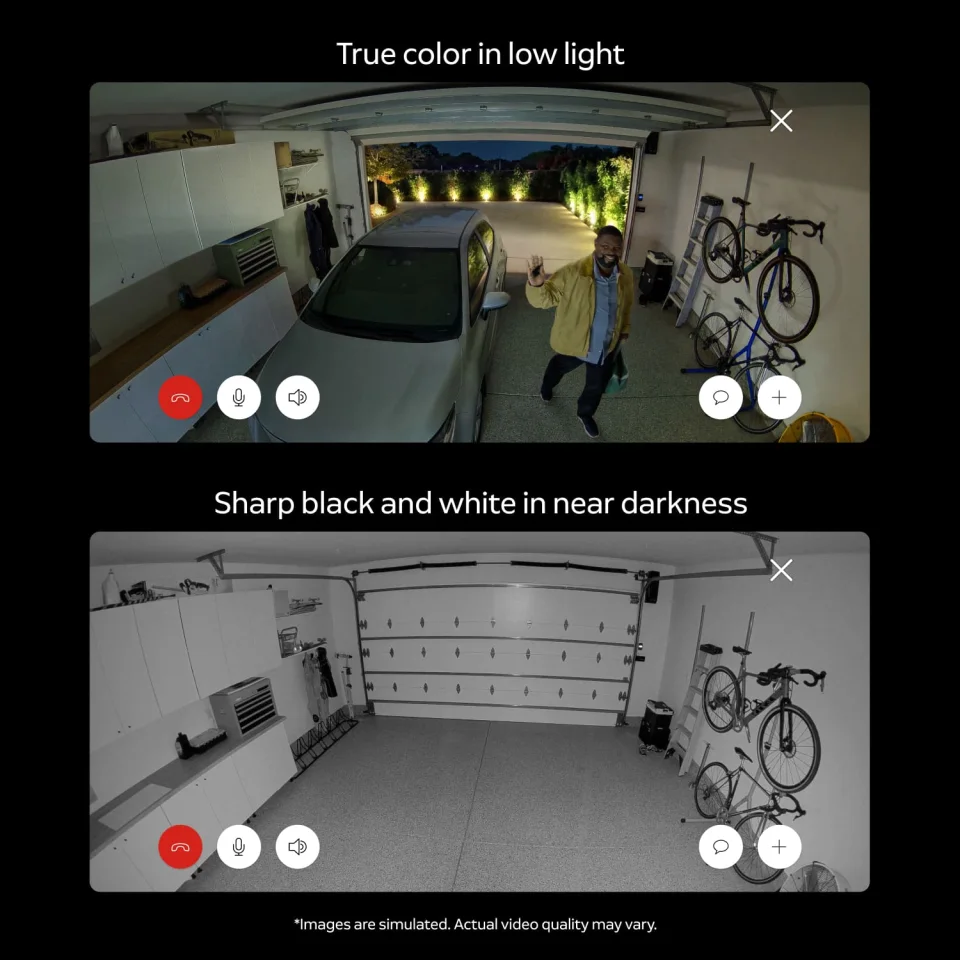
Night vision is documented differently. Google tells you exactly what you get: 15 feet, two 850 nm IR LEDs, HDR at night. Ring promises true colour in low light and sharp black-and-white in near darkness but publishes no distance or LED count. Ring's low-light illustrations are also labelled as simulated by Ring itself — the caption on the night-vision photo in this article reflects that.
Privacy: hardware vs software. Ring ships a detachable lens cover in the box — slide it across and the lens is physically blocked (it muffles, not disables, the mic; you switch the mic off in the Ring app for full audio privacy), plus Privacy Zones to black out areas. Nest relies on software: encrypted video, a green status LED when streaming or recording, and the Google Account's two-step verification. If a physical shutter matters to you, Ring wins this row outright.
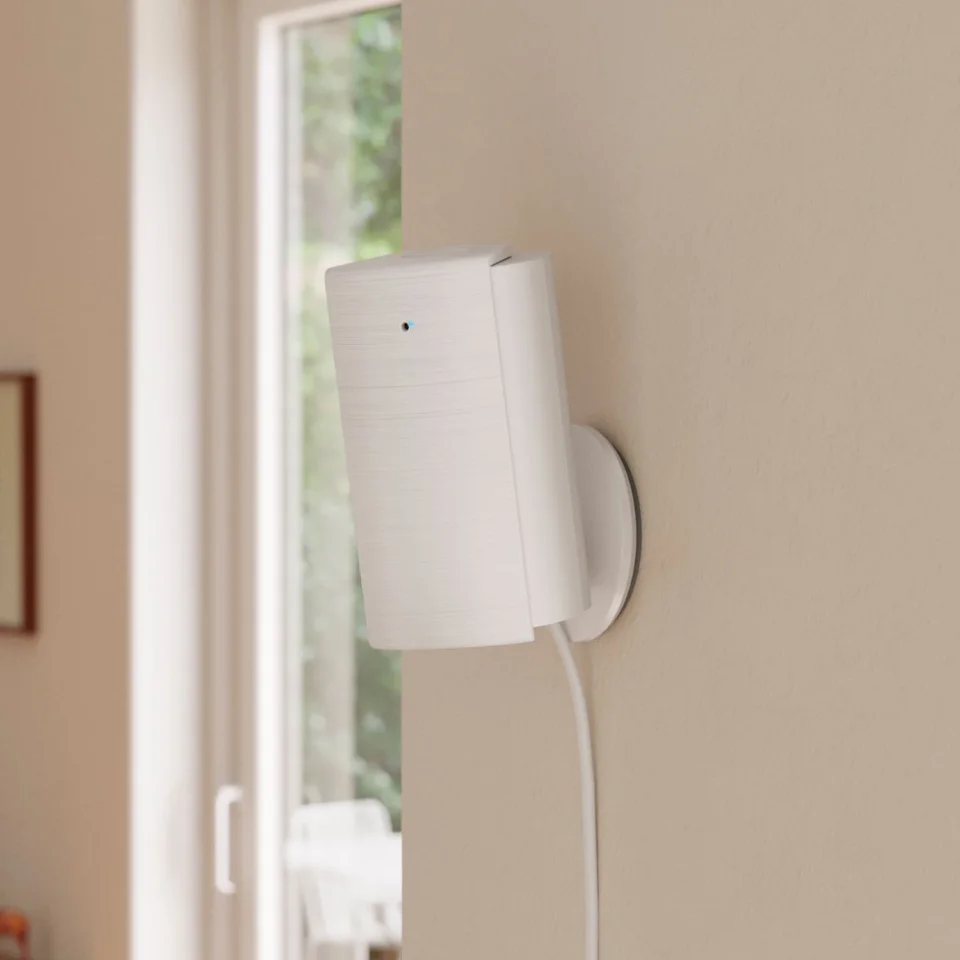
Siren and zoom reach. Ring has a remote-activated siren; Google's official spec sheet lists none for the 3rd gen. Ring's 10x Enhanced Zoom plus 4K resolution means digitally zoomed footage stays usable at ranges where Nest's 6x zoom on a 2K image starts to fall apart.
Internet appetite. Ring is explicit: 15 Mbps upload minimum, 20 Mbps for the best 4K experience, with adaptive bitrate that drops quality to keep the stream stable. Google publishes bandwidth guidance rather than a single minimum, and its 2K stream is simply the lighter load — an easier fit for slower connections.
Free tier and subscriptions. Without paying, Nest gives you 6 hours of event video previews in 10-second clips — enough to look back at what just happened. Ring gives you live view, real-time motion notifications and two-way talk, but no history at all: miss it, and it's gone unless you subscribe. For paid plans the maths differs structurally: Google Home Premium covers all your Nest cameras for one price ($10/mo or $100/yr Standard; $20/mo or $200/yr Advanced), while Ring's entry-level plans are per-camera. Either way, budget the subscription — neither camera has local storage, so the plan is the memory.
Ecosystem lock-in. The Nest camera requires the Google Home app and works with Nest displays, the Google TV Streamer and the Pixel Tablet. The Ring camera lives in the Ring app and the Alexa world — Echo devices and Fire TV. Buy the one that matches the home you already have; switching ecosystems for one camera is rarely worth it. (Context: our older Nest Cam vs Ring Indoor Cam piece reached the same conclusion with the previous generations — the 3rd gen and the 4K model sharpen it.)
Pros and cons
Google Nest Cam Indoor (3rd Gen)
Pros
- Wider 152° diagonal field of view — best pick for covering a whole room with one camera
- Documented night vision: 15 ft range with two 850 nm IR LEDs
- Gemini AI features on the Advanced plan: searchable video history, detailed event descriptions, daily summaries
- 6 hours of free event-video previews — the better no-subscription experience
- One Google Home Premium subscription covers all Nest cameras at your home
- H.264 + H.265 encoding; lighter 2K stream than 4K
Cons
- Lower resolution (2K) and only 6x digital zoom — noticeably less detail than the Ring 4K
- No siren listed in Google's official specs
- No physical privacy shutter — software security only
- Requires the Google Home app; not compatible with the Nest app or home.nest.com
- The genuinely useful AI features (search, descriptions) sit on the $20/month Advanced tier
- No local storage — recordings live and die with Google's cloud
Ring Indoor Cam 4K
Pros
- True 4K (3840×2160) with Auto HDR — the sharpest image of any Ring indoor camera
- Up to 10x Enhanced Zoom that holds up thanks to the 4K sensor
- Detachable lens cover in the box + Privacy Zones — real physical privacy control
- Remote-activated siren
- Wi-Fi 6 (dual-band) — the more future-proof wireless spec on paper
- $99.99 — cheaper up front than the Nest
Cons
- Narrower field of view on paper (115° H / 60° V)
- Demanding on the network: Ring wants 15–20 Mbps upload for 4K
- No recordings at all without a subscription; no local storage either
- Night-vision range and IR specs are not published by Ring
- Smart-video features (descriptions, search) need a compatible subscription
Who should buy which
Buy the Nest Cam Indoor (3rd Gen) if: you run your home on Google — Nest displays, Google TV, the Home app — and you want the widest single-camera view, documented night vision, and the best free tier of the two. It is also the safer choice on slower internet.
Buy the Ring Indoor Cam 4K if: you run your home on Alexa and Echo devices, you want the sharpest footage you can get indoors for under $100, you need a physical lens cover for privacy, or a siren matters to you. Just make sure your upload speed can feed it.
Buy neither (for now) if: you want to avoid subscriptions — neither camera stores anything locally, and a subscription is effectively the camera's memory. That is true across Google's range too: the Google Nest Cam (battery) is cloud-first in the same way. If avoiding a plan is your top priority, look at cameras with microSD or local-hub storage instead of either of these two.
FAQ
Which camera has better video quality, Nest Cam 3rd Gen or Ring Indoor Cam 4K?
On paper, the Ring Indoor Cam 4K: true 4K (3840×2160) with Auto HDR versus the Nest's 2K HDR (2560×1440) at up to 30 fps. Ring also offers up to 10x Enhanced Zoom against Nest's 6x digital zoom, so zoomed-in detail should favour Ring. This is a spec-based comparison — no hands-on testing was done for this article.
Can I use either camera without a subscription?
Yes, but the experience differs. The Nest Cam Indoor (3rd Gen) includes 6 hours of event video previews (10-second clips) with no subscription. The Ring Indoor Cam 4K works for live view, real-time motion notifications and two-way talk without a plan, but you cannot review, save or share any recordings. Both cameras lack local storage, so a subscription is the only way to keep footage on either.
Which is better for a small room?
The Nest's 152° diagonal field of view is the wider lens on paper, so one Nest camera covers more of a small room from a short distance. Ring quotes 115° horizontal / 60° vertical with no diagonal figure published, so a direct degree-to-degree comparison isn't published by the vendors.
What internet speed do these cameras need?
Ring is explicit: at least 15 Mbps upload recommended, and 20 Mbps for the best 4K experience, with adaptive bitrate that lowers quality to keep the connection stable. Google publishes bandwidth guidance rather than a single minimum, and its 2K stream is inherently lighter than Ring's 4K one — so the Nest is the easier fit on slower connections.
Will the Nest Cam work with Alexa, and the Ring cam with Google Home?
Buy for the ecosystem you own. The Nest Cam Indoor (3rd Gen) requires the Google Home app and a free Google Account — it is not compatible with the old Nest app or home.nest.com — and its viewing integrations are Google devices (Nest displays, Google TV Streamer, Pixel Tablet). The Ring Indoor Cam 4K lives in the Ring app with Alexa integrations (Echo, Fire TV). Neither is the natural pick for the other camp's smart home.
Where to buy
Google Nest Cam Indoor (wired, 3rd gen) — $129.99 at the Google Store
Ring Indoor Cam 4K — $99.99 at Ring
Google Nest Cam Indoor (3rd Gen) on Amazon
Ring Indoor Cam 4K on Amazon
Prices checked against store.google.com and ring.com on 2026-10-18; retailers may run promotions or change pricing. Google's store page currently shows $129.99 in the buy box while its FAQ section still lists the $99.99 launch price.
Comments
No notes yet. If you own one of these cameras, tell us what the spec sheet left out.