Home security has become increasingly important as technology makes it easier to monitor properties remotely. Security cameras now offer features like high-definition video, night vision, motion detection, and smartphone alerts that help protect homes and businesses.
Whether you need to watch your front door, monitor a warehouse, or keep an eye on pets, modern cameras provide peace of mind through constant connectivity.
The right camera depends on where you’ll use it and what you need to monitor. Indoor cameras are typically smaller and designed for discreet placement. Outdoor models must withstand weather and temperature changes.
Smart cameras integrate with home automation systems and offer advanced features like facial recognition and two-way audio. Business cameras prioritize reliability and often include longer recording times and multiple camera management.
Each type serves different needs, from basic monitoring to comprehensive security systems.
When choosing a security camera, consider resolution quality, storage options, and power source. Video quality matters most when you need to identify faces or details, so look for at least 1080p resolution.
Storage can be cloud-based or local through SD cards, each with different costs and accessibility. Power options include wired connections for constant operation or battery-powered models for flexible placement.
Best Indoor Cameras
We’ve tested and evaluated dozens of indoor cameras to bring you this comprehensive list of top performers. Our selections are based on video quality, smart features, ease of use, and overall value.
eufy Security Indoor Cam E30

We found this camera delivers excellent 4K video quality and smart tracking features without requiring a subscription. It’s a solid choice for monitoring pets, children, or home security.
Pros
- 4K resolution captures sharp details with impressive color night vision
- AI tracking follows movement automatically across the full 360-degree range
- No monthly fees required with local storage option
Cons
- HomeKit compatibility limited to 1080p instead of full 4K
- Requires wired power connection, limiting placement flexibility
- Built-in spotlight may be too bright for bedroom use at night
We set this up in our living room to keep an eye on our pets during the day. The 4K video quality genuinely impressed us, showing crisp details even when zooming in on specific areas through the app.
The panoramic view feature lets us quickly scan the entire room with a simple tap. The AI tracking worked better than we expected.
When our dog walked across the room, the camera smoothly followed him without any manual adjustment. It distinguished between our pet and other movement like ceiling fans or shadows, which reduced false alerts significantly.
Night vision performance stood out during our testing. The built-in spotlight provides full color footage even in dark conditions, though we found it a bit bright for overnight monitoring in bedrooms.
Switching to infrared mode solved this while still maintaining clear visibility. We appreciated the straightforward setup process and the fact that everything works without paying monthly fees.
The two-way audio came through clearly when we wanted to check in or redirect our pets. Local storage via microSD card means our footage stays private without relying on cloud services.
Smart home integration worked seamlessly with Alexa and Google Assistant. HomeKit users should note the resolution drops to 1080p when using Apple’s ecosystem, which felt like a limitation given the camera’s 4K capability.
The wired power requirement also meant we needed to position it near an outlet, though the included cable provided decent length.
TP-Link Tapo C100
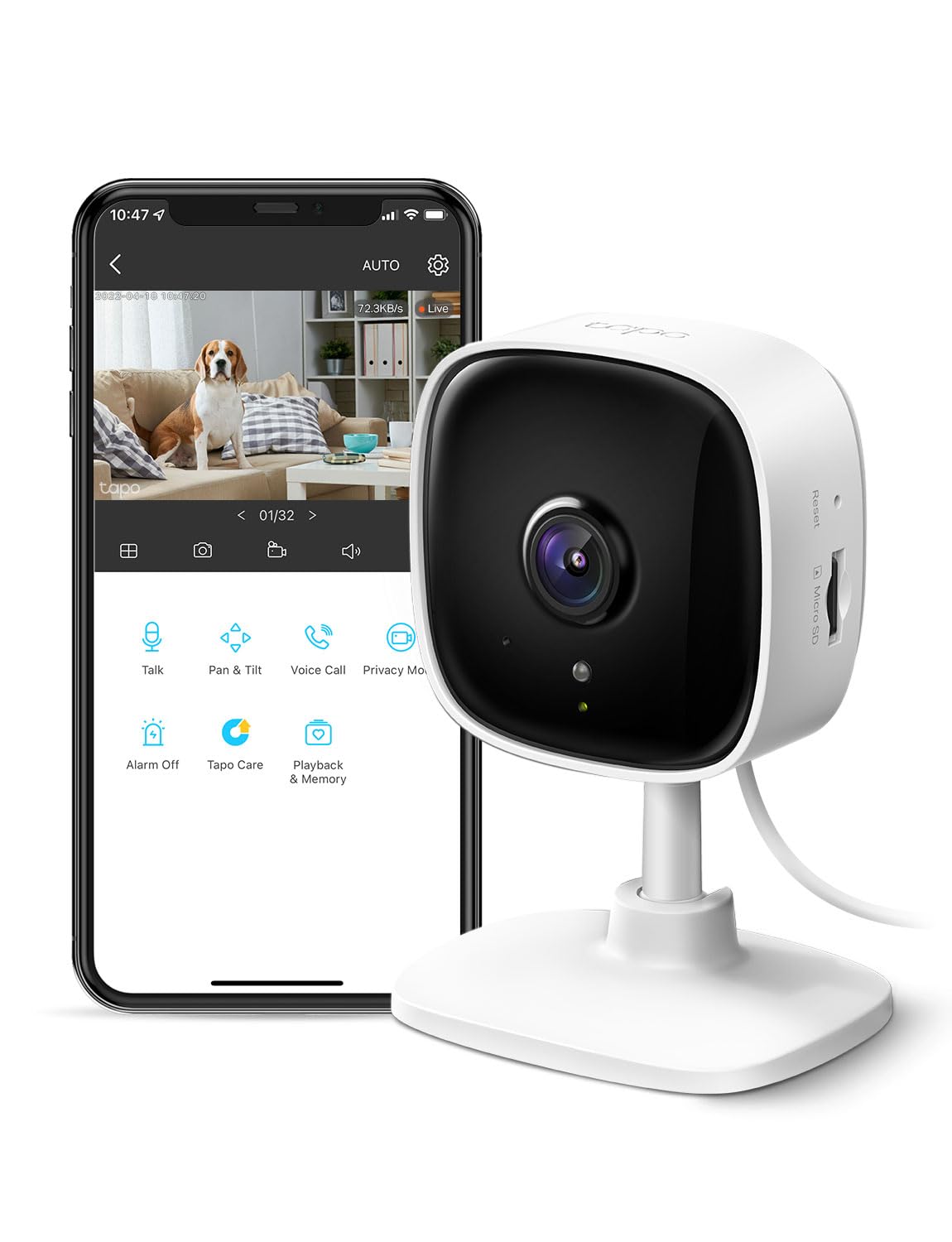
This budget-friendly indoor camera delivers impressive 1080P video quality and smart detection features without requiring a subscription. It’s an excellent choice for anyone looking to monitor pets, babies, or their home.
Pros
- Motion and person detection with instant alerts work reliably without monthly fees
- Clear 1080P video quality captures fine details even when zooming in digitally
- Local storage via microSD card up to 512GB means no forced cloud subscriptions
Cons
- Occasional short interruptions appear in recorded footage when reviewing playback
- Only connects to 2.4GHz Wi-Fi networks, not 5GHz bands
- Requires checking compatibility list before purchasing a microSD card
We set up the Tapo C100 in under five minutes, which genuinely surprised us given how straightforward the app made the connection process. The camera immediately started streaming crisp video that let us see across an entire room thanks to the 110-degree field of view.
Using this as a pet camera during a workday proved incredibly convenient. We could check in on our dog throughout the day and even talk to him through the two-way audio, which came through clearly on both ends.
The built-in siren feature adds an extra layer of security if we needed to scare off an intruder. Night vision performs well up to about 30 feet, delivering grayscale footage that remained detailed enough to identify objects and movement in complete darkness.
We tested it in a bedroom overnight and could clearly see what was happening even without any ambient light. The motion detection worked accurately for us, sending push notifications when it detected movement or recognized a person.
We appreciated that person detection comes included without paying extra, which helped reduce false alerts from shadows or lighting changes. Baby crying detection requires the optional Tapo Care subscription, but the core features work perfectly fine without it.
Voice control with Alexa and Google Assistant integrated seamlessly into our smart home setup. We asked our Echo Show to display the camera feed and it appeared within seconds, which made checking the camera from another room effortless.
Storage flexibility stands out as a major advantage. We inserted our own microSD card and the camera recorded continuously without any monthly fees.
The option to add cloud storage through Tapo Care exists if we wanted 30-day history and motion tracking, but local storage handles our needs just fine. We did notice minor glitches in the recordings where a few seconds would occasionally get cut out during playback.
This happened rarely enough that it didn’t significantly impact our ability to review what happened throughout the day. The app interface makes scrolling through footage simple, with a timeline showing when motion events occurred.
Build quality feels solid for the price point, with a compact design that fits easily on shelves or mounts to walls. The white plastic housing blends into most home decor without drawing attention.
Tapo C120 2K+ Camera

We recommend this camera for anyone seeking excellent value in a compact design that works both indoors and outdoors with impressive AI detection capabilities.
Pros
- Magnetic base makes repositioning incredibly simple without drilling new holes
- AI detection works without subscription fees and accurately identifies people, pets, and vehicles
- Starlight sensor delivers surprisingly vibrant color footage even in low light conditions
Cons
- The included cable at 3 meters felt limiting for certain outdoor installations
- Wi-Fi only supports 2.4GHz networks which may be slower in some setups
- Sound alerts can be overly sensitive and require fine-tuning to avoid frequent notifications
We mounted this camera outside our front entrance and were impressed by how the magnetic base let us test different angles before committing to a permanent spot. The 2K resolution captures crisp details during the day.
We could easily read license plates on cars parked across the street. The AI detection genuinely impressed us after we customized the alert zones.
We set it to ignore our driveway but notify us when someone approached the porch. The pet detection caught our neighbor’s dog wandering through the yard without false alerts from passing shadows or leaves.
Night vision performs better than we anticipated from a budget-friendly option. The color mode worked well with our porch light on, showing accurate skin tones and clothing colors.
When we switched to invisible IR mode, the 30-foot range covered our entire front yard without that telltale red glow. Two-way audio worked smoothly when we tested it with a delivery driver.
The full duplex feature meant we could interrupt naturally without the walkie-talkie style push-to-talk limitations. Background noise cancellation helped our voice come through clearly despite wind.
We appreciated the flexibility between local and cloud storage options. Dropping in a 256GB microSD card gave us weeks of continuous recording without monthly fees.
The app interface makes reviewing footage straightforward with quick filters for motion events. Setup took us under ten minutes from unboxing to live viewing.
The QR code pairing connected instantly to our network. We did notice the camera operates only on 2.4GHz Wi-Fi, which might require adjusting router settings if you primarily use 5GHz networks.
Kasa EC70 Pan/Tilt Camera

The Kasa EC70 delivers reliable 1080p monitoring with pan and tilt functionality at a budget-friendly price. It’s a practical choice for anyone wanting flexible indoor surveillance without monthly fees.
Pros
- Local storage option eliminates subscription costs while continuously recording to a microSD card
- Pan and tilt controls allow coverage of entire rooms through the app
- Motion tracking and patrol mode automatically follow movement throughout the space
Cons
- Setup requires a 2.4 GHz network which can be limiting in homes with newer routers
- Night vision range of 30 feet falls short in larger spaces
- Two-way audio quality doesn’t match the video clarity
We found the EC70 straightforward to mount and connect through the Kasa app. The camera responded quickly to our pan and tilt commands, letting us check different corners of the room without repositioning the unit itself.
Video quality during daytime impressed us with sharp details and accurate colors. We could easily distinguish faces and read text on packages across a medium-sized room.
The night vision switched on automatically as lighting dimmed, though objects beyond 20 feet became harder to identify clearly. Motion alerts arrived on our phones within seconds of detection.
We appreciated the ability to adjust sensitivity levels since our first settings triggered notifications from shadows and light changes. The patrol mode cycled through preset positions automatically, which worked well for monitoring multiple areas on a schedule.
Recording to a local microSD card saved us from subscription fees. We installed a 128GB card that stored several days of footage before overwriting older clips.
The Kasa Care cloud option exists for those wanting longer retention, but we didn’t find it necessary for basic home monitoring. Smart home integration with Alexa and Google Assistant functioned reliably.
We set up voice commands to check the camera feed on our smart display and created automations that turned on lights when motion was detected. The camera worked smoothly with other Kasa devices we already owned.
REOLINK E1 4MP Indoor Camera
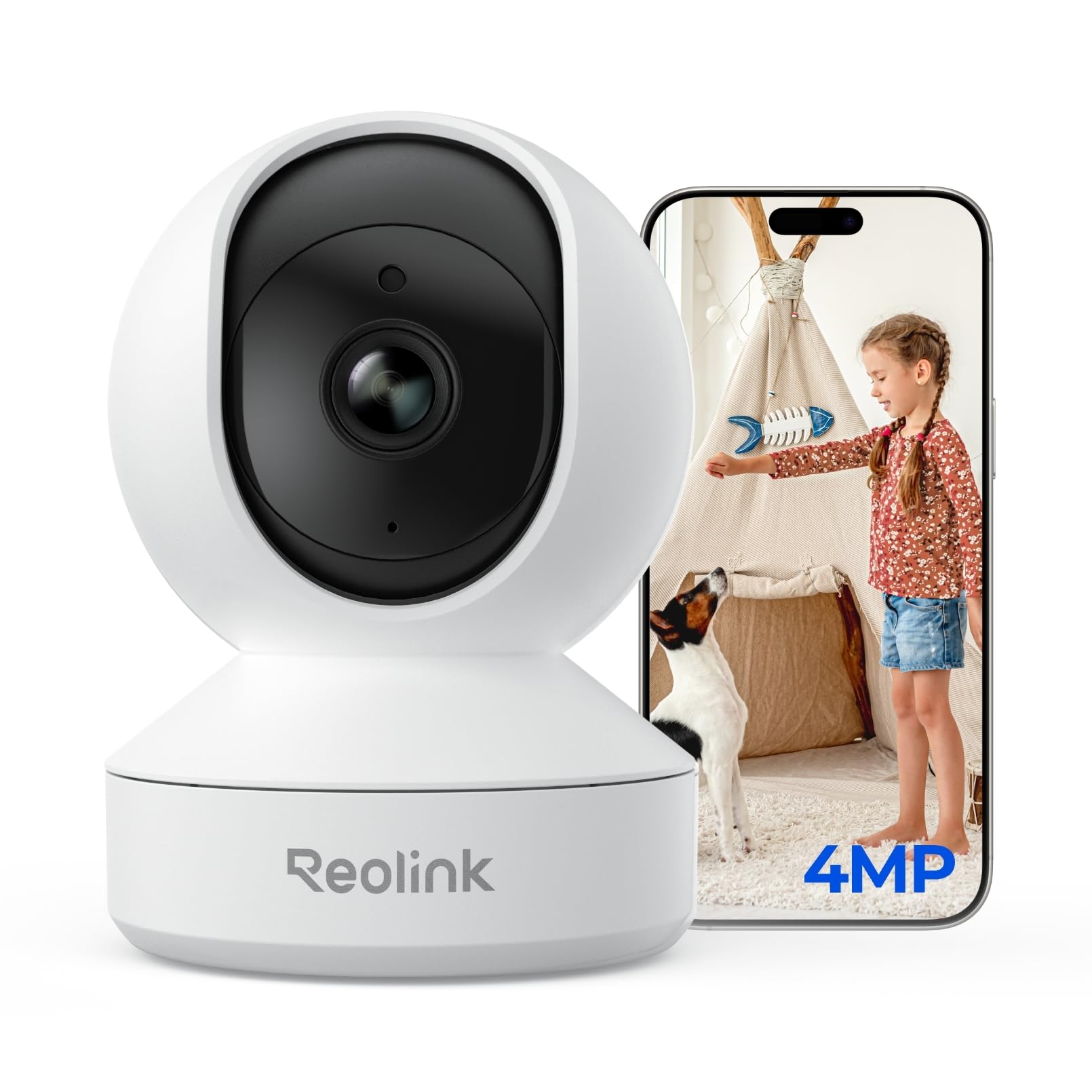
This camera delivers solid performance for baby and pet monitoring without subscription fees. However, it lacks some advanced protocol support.
Pros
- No subscription required with multiple local storage options including microSD cards up to 512GB
- Full 360-degree coverage with pan and auto-tracking that follows movement automatically
- Cry detection alerts specifically designed for baby monitoring with reliable two-way audio
Cons
- Does not support RTSP or ONVIF protocols, limiting third-party integration options
- Limited to 2.4GHz WiFi only, which may cause connectivity issues in crowded networks
- Setup process requires pointing the camera at your WiFi credentials, which can be awkward
We found the 4MP image quality genuinely impressive for an indoor camera in this price range. The clarity during daytime monitoring picked up fine details like pet movements and facial expressions without any graininess.
Night vision performed well in our testing, illuminating a nursery adequately without creating harsh glare. The pan and tracking features worked smoothly when we tested them with both pets and people moving around the room.
We appreciated how quietly the motor operates since it doesn’t startle babies or alert pets to surveillance. The 355-degree rotation provided nearly complete room coverage from a single mounting position.
Storage flexibility stands out as a major advantage since we could choose between local microSD cards or Reolink’s own hub systems. We never felt pressured to subscribe to cloud services, which keeps long-term costs down.
The app allowed us to share access with up to 10 users, though only four can view simultaneously. Two-way audio quality was clear enough for basic communication, whether calming a baby or calling to a pet.
The privacy mode feature gave us control over when the camera actively records, which we toggled easily through the admin account. We did notice the lack of 5GHz WiFi support caused occasional lag in areas with network congestion.
eufy Security Indoor Cam S350
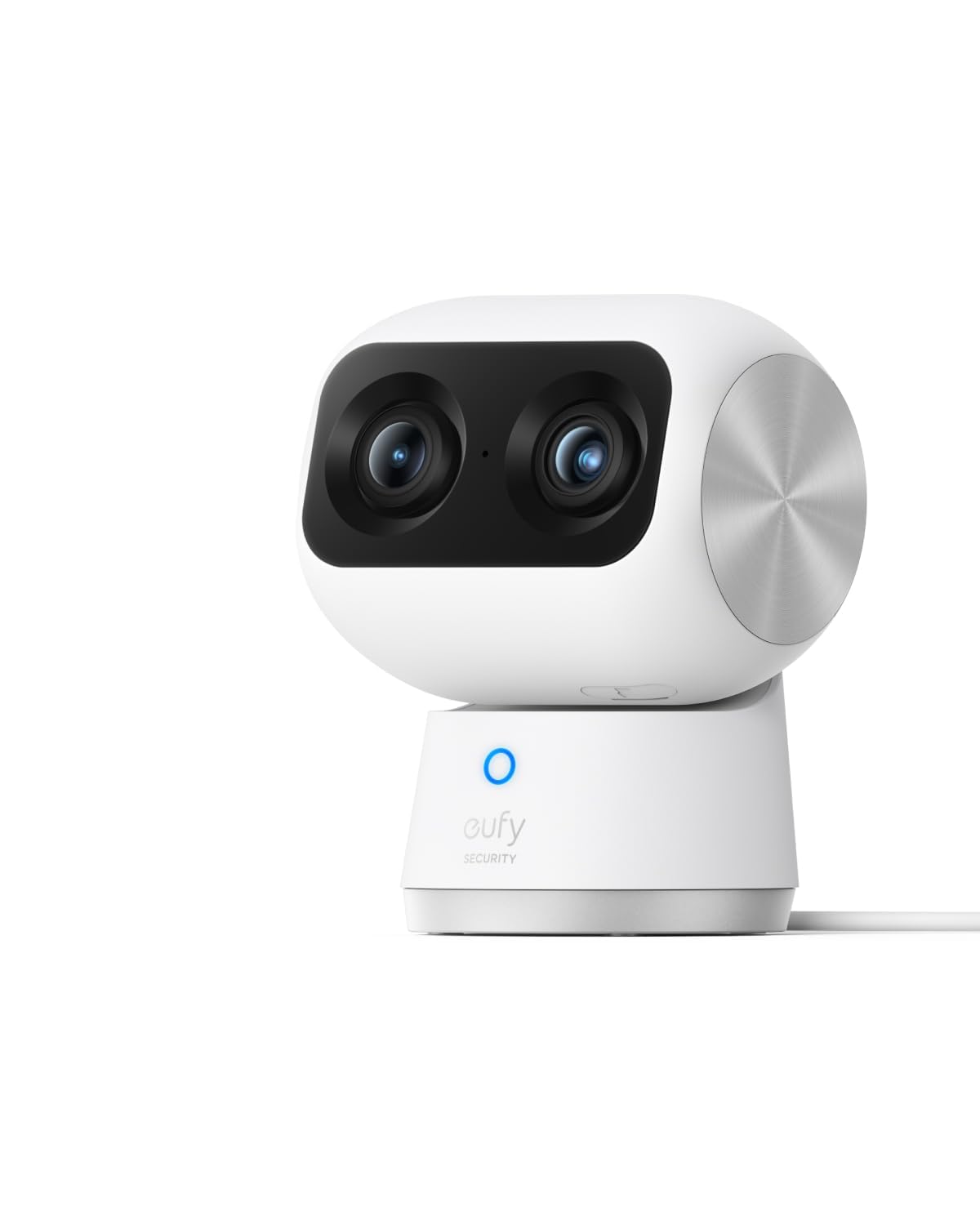
This dual-lens camera delivers exceptional 4K clarity and intelligent tracking without subscription fees. It is ideal for anyone who wants premium indoor monitoring with local storage privacy.
Pros
- Dual-lens system provides simultaneous wide-angle and zoomed views on one screen
- Local storage eliminates monthly fees and keeps footage completely private
- Smart detection accurately distinguishes between people, pets, and specific sounds like crying
Cons
- Requires HomeBase 3 and won’t work with the older HomeBase 2 model
- SD card sold separately despite being essential for the no-fee storage benefit
- Initial setup involved some formatting quirks with the memory card
We tested the eufy Security Indoor Cam S350 monitoring various spaces throughout our home. The 4K wide-angle lens paired with the 2K telephoto creates a viewing experience we haven’t found in other indoor cameras.
While checking on different rooms, we could zoom into specific details without losing sight of the broader context. The 360-degree pan capability with auto-tracking worked reliably during our testing.
We set preset positions for frequently monitored areas and appreciated the one-tap navigation. The camera followed movement smoothly, though it occasionally hesitated when tracking particularly fast motion.
Night vision performance impressed us with clear footage up to 32 feet in complete darkness. The two infrared LEDs provided detailed images without disturbing anyone sleeping.
The AI detection system proved accurate at differentiating between our pets and family members. Notifications arrived promptly when the camera detected specific sounds or movements.
We saved significantly by avoiding subscription costs, though purchasing a quality SD card added to the initial investment. Physical privacy mode offers peace of mind when recording isn’t needed.
The camera requires a wired power connection, which limited placement options compared to battery models. We found the S350 delivers professional-grade features at a reasonable one-time cost.
Techage 2K Home Security Camera 4-Pack
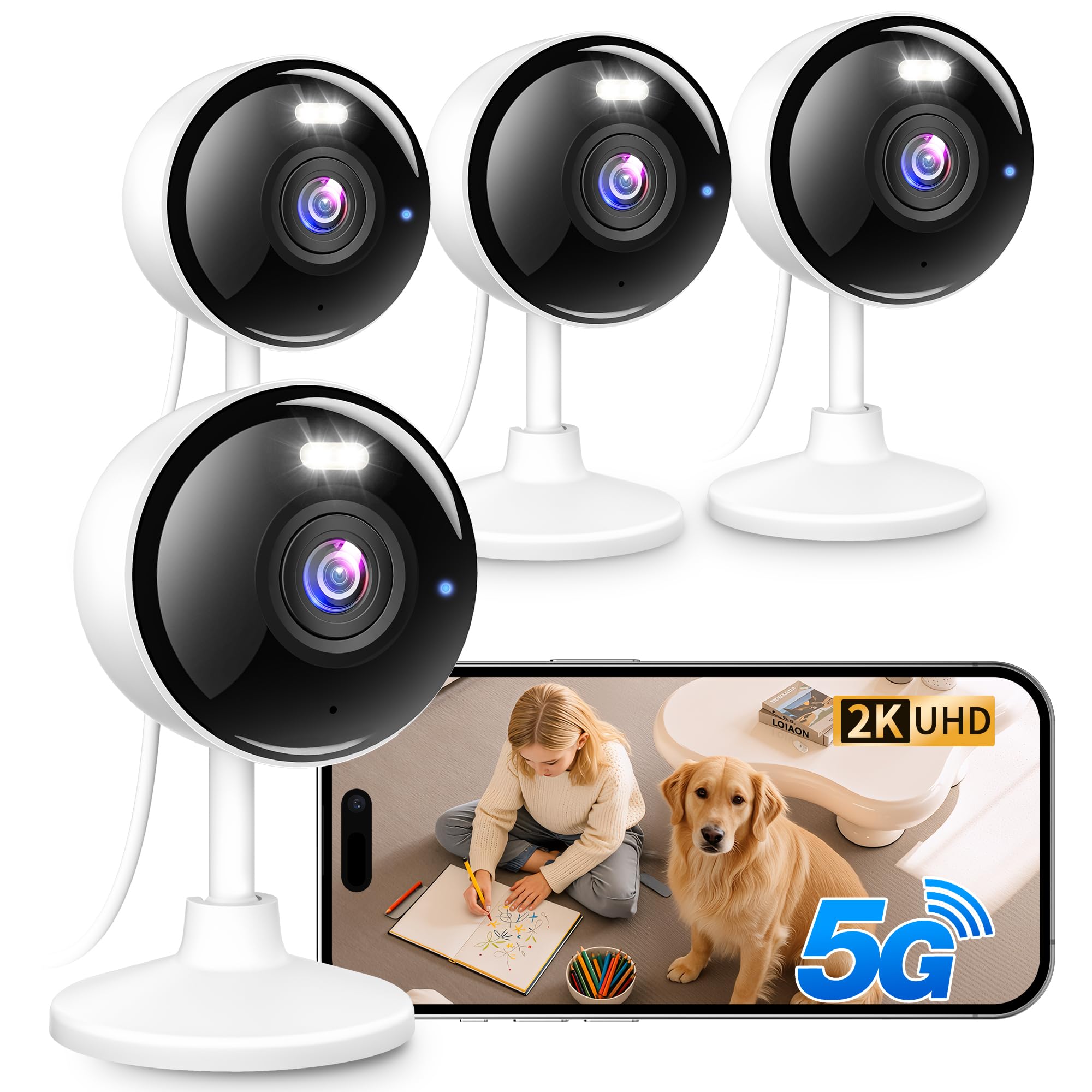
This four-pack delivers solid 2K video quality and versatile placement options at a reasonable price. Connectivity issues may frustrate some users.
Pros
- 2K resolution provides noticeably sharper images than standard 1080p cameras
- Color night vision with built-in white LEDs captures clear footage after dark
- IP65 weatherproof rating allows installation virtually anywhere around your property
Cons
- Some units drop offline frequently and require reconnection
- Must remain plugged in at all times, limiting placement flexibility
- Pan and tilt features aren’t intuitive to locate or use in the app
We found the setup process straightforward when connecting these cameras to our network. The Bluetooth pairing made adding each unit to the app faster than expected.
Once connected to our dual-band WiFi, the 2304 x 1296 resolution delivered crisp footage that made identifying details easy. The color night vision genuinely impressed us during testing.
Unlike cameras that switch to grainy black-and-white infrared, these maintained color clarity when the white LEDs activated. We could distinguish specific features and colors even in low-light conditions.
Motion detection worked reliably within the stated 33 to 66-foot range. The alerts arrived on our phones quickly, though the twice-per-minute notification limit prevented us from getting overwhelmed.
Two-way audio came through clearly enough for basic conversations with family members. We experienced occasional connectivity dropouts with one camera in our four-pack.
When it went offline, we had to manually reconnect it through the app. The wired power requirement also meant we needed outlets near each installation point, which restricted some of our preferred mounting locations.
The 24/7 recording to a local SD card (sold separately, up to 128GB) worked without issues. We appreciated having storage options beyond the 30-day cloud trial.
The IP65 rating held up during light rain and temperature changes in our outdoor installations.
Rocktone Dual-Band Security Camera 2-Pack

This affordable two-pack camera delivers solid performance with dual-band WiFi connectivity and full-color night vision. It stands out from basic infrared-only competitors.
Pros
- Dual-band WiFi support eliminates connectivity headaches in crowded network environments
- Color night vision with built-in spotlights captures detailed nighttime footage
- Setup takes under five minutes with straightforward app pairing
Cons
- Spotlight cannot be disabled for discreet monitoring needs
- Frame rate limited to 15 fps may show slight motion blur
- Some users reported 5GHz connection difficulties
We found the Rocktone camera exceptionally easy to mount and configure right out of the box. The included brackets and hardware made installation simple whether we placed them indoors on a shelf or outdoors under an eave.
The 1080p image quality impressed us during daytime use. The color night vision truly makes a difference compared to standard infrared cameras we’ve tested.
Being able to see actual colors at night instead of grainy black-and-white footage helps identify details like clothing or vehicle colors. Two-way audio worked smoothly for communicating through the camera, though the built-in speaker volume could be slightly louder for outdoor applications.
We appreciated the smart motion detection that sent push notifications to our phones without excessive false alerts. The dual-band WiFi proved reliable on our 2.4GHz network, maintaining a stable connection throughout our testing period.
Cloud storage offers a free seven-day trial. Local SD card recording up to 128GB provides an economical alternative for continuous 24/7 recording.
At this price point for a two-pack, we consider these cameras an excellent value for basic home security needs. The spotlight feature works well for deterring unwanted visitors, though it limits stealth monitoring options.
Tapo C500

The Tapo C500 delivers reliable 360-degree outdoor monitoring at a reasonable price point. It is a solid choice for covering large areas around your property.
Pros
- Complete panoramic coverage eliminates blind spots with smooth pan and tilt movement
- Person detection and motion tracking work accurately to follow activity automatically
- Physical privacy mode blocks the lens when you need it, giving you control over recording
Cons
- Some units develop a loud whining noise during panning after extended use
- Initial WiFi setup can be finicky and requires patience to complete
- Detection zones are limited to a single layer, which restricts customization options
We found the 360-degree rotation genuinely useful for monitoring our entire yard without needing multiple cameras. The camera smoothly pans and tilts through the app, and we could check different angles throughout the day.
Image quality at 1080p remained sharp during daylight, capturing enough detail to identify people and objects clearly. Night vision performed well up to the advertised 98 feet, though clarity drops off at the furthest distances.
We tested the camera in complete darkness and could still make out movement and basic shapes across our property. The infrared lighting doesn’t create that overly bright, washed-out effect we’ve seen with other models.
Motion tracking responded quickly when someone walked through the camera’s view. The camera followed movement automatically and sent notifications to our phone within seconds.
However, we noticed the single detection zone limitation means you can’t create complex monitoring areas like you might want for separating your driveway from a sidewalk. Setting up the microSD card storage worked without issues, and we appreciated not being forced into a subscription.
The two-way audio came through clearly enough for basic conversations, though wind can affect the microphone. We mounted ours under an eave using the included hardware, and the IP65 rating has held up through several rainstorms so far.
eufy Security eufyCam C35 4-Cam Kit
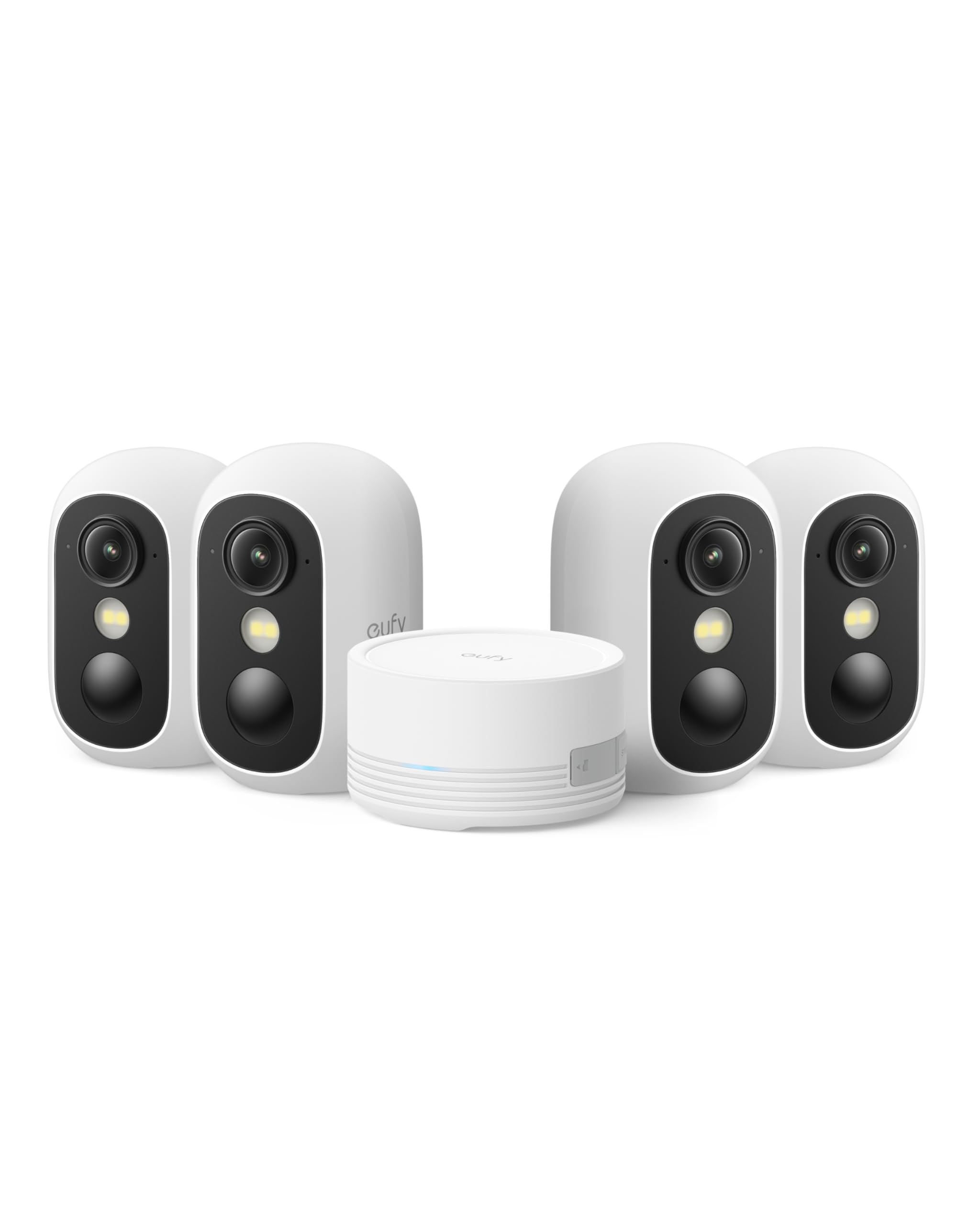
This four-camera system delivers reliable security monitoring without subscription fees. Battery life may require more frequent charging than expected.
Pros
- Magnetic mounting makes installation quick and tool-free on metal surfaces
- Color night vision captures details without spotlights disturbing neighbors or wildlife
- Local storage through HomeBase Mini eliminates monthly cloud subscription costs
Cons
- Battery drains faster than advertised, requiring recharges roughly every month
- Limited to 2.4 GHz Wi-Fi which may cause connectivity issues in some setups
- App interface lacks robust PC viewing options for continuous live feed monitoring
We found the magnetic mounting system genuinely convenient during installation. The cameras snap firmly onto metal surfaces in seconds, and the included stands work well on flat areas where magnetic mounting isn’t an option.
Setup through the eufy app took us about fifteen minutes for all four cameras once we paired them with the HomeBase Mini. The color night vision impressed us with its clarity in low light conditions.
We could identify faces and read license plates without any visible spotlight, which means the cameras don’t announce their presence at night. The AI detection reliably differentiated between people, vehicles, and pets in our testing, sending accurate alerts to our phones.
Battery performance fell short of our expectations based on the marketing claims. We needed to recharge the cameras after about three to four weeks of regular use, which felt more frequent than we anticipated.
The facial recognition feature through the HomeBase Mini worked well once we trained it, though it required the updated app version to function properly. Local storage gives us peace of mind knowing footage stays on our property rather than in the cloud.
The HomeBase Mini handles recordings from all four cameras, and we appreciate the option to expand storage up to 1TB. The IP67 rating proved legitimate during rain and humidity exposure over several weeks of outdoor use.
Buying Guide
When we’re selecting a security camera, we need to start with where it will be installed. Indoor cameras typically need less weatherproofing but may prioritize discreet design.
Outdoor cameras must withstand rain, snow, and extreme temperatures.
Resolution and Image Quality
Higher resolution means clearer footage for identifying faces and details. Look for at least 1080p, though 2K or 4K provides even better clarity.
Night vision capability is essential for 24/7 monitoring.
Power and Connectivity
Decide between wired and wireless options based on your setup. Wired cameras offer consistent power and connection but require more installation work.
Wireless models provide flexibility but need battery changes or solar charging.
Storage Options
| Storage Type | Advantages | Considerations |
|---|---|---|
| Cloud | Access anywhere, automatic backup | Subscription costs, internet required |
| Local | No monthly fees, full control | Limited by storage capacity, vulnerable to theft |
| Hybrid | Best of both options | Higher initial cost |
Smart Features
Motion detection helps reduce unnecessary recordings and alerts us to activity. Two-way audio allows communication through the camera.
Integration with smart home systems adds convenience for automation.
Field of View
Consider how much area the camera covers. Wider angles capture more space but may sacrifice detail.
Pan-and-tilt functions let us adjust the view remotely.
Business vs Home Use
Business cameras often need higher durability and longer warranty periods. Advanced features like people counting or heat mapping may be required.
Home cameras typically focus on ease of use and family-friendly features.
Frequently Asked Questions
What features should I prioritize when choosing a camera for home security?
Focus on resolution first, with 1080p as the minimum and 2K or 4K providing better facial recognition and detail capture. Motion detection with customizable zones helps reduce false alerts from passing cars or swaying trees.
Two-way audio allows communication with visitors or potential intruders. Night vision range matters for low-light performance, with most quality cameras offering 25 to 30 feet of infrared visibility.
Local or cloud storage options determine how footage is saved and accessed. Integration with existing smart home systems streamlines control and monitoring.
How do I compare image quality and night vision performance across different camera models?
Resolution specifications tell part of the story, but sensor size and lens quality affect actual image clarity. Look at sample footage in various lighting conditions rather than relying solely on megapixel counts.
Night vision technology varies between infrared LEDs, color night vision, and starlight sensors. Infrared provides black-and-white footage up to 30 feet in complete darkness.
Color night vision requires ambient light from streetlamps or porch lights but maintains color detail. Test cameras in complete darkness and low-light scenarios to verify manufacturer claims.
Field of view width also impacts coverage area, with most cameras ranging from 100 to 180 degrees.
Which camera setups work best for monitoring a small business or retail space?
Multi-camera systems with centralized management are ideal for businesses requiring coverage of multiple areas. Pan-tilt-zoom cameras work well for monitoring large open retail floors from a single mounting point.
Fixed cameras with wide-angle lenses suit entryways, cash registers, and storage areas where specific zones need constant monitoring. 2K resolution helps identify cash handling and transaction details.
Continuous recording rather than motion-only capture ensures no gaps in business hour footage. Network video recorders with adequate storage capacity support multiple camera feeds simultaneously.
Cameras with business hours scheduling allow for automatic recording adjustments.
What is the difference between local storage and cloud storage, and which is more reliable?
Local storage uses SD cards or network video recorders to save footage directly on physical devices at your location. This method avoids monthly subscription fees and maintains full control over your data.
Cloud storage uploads footage to remote servers managed by the camera manufacturer or third-party service. This approach protects recordings from theft or damage to the camera itself.
Local storage depends on the physical security of your recording device and requires manual management of storage capacity. Cloud storage requires stable internet bandwidth and typically involves ongoing subscription costs ranging from $3 to $30 monthly.
Both methods together provide redundancy when monitoring critical areas.
How can I ensure my security camera system is secure from hacking and unauthorized access?
Change default passwords immediately upon installation, using unique passwords with at least 12 characters combining letters, numbers, and symbols. Two-factor authentication adds another security layer requiring a code from your phone during login.
Firmware updates patch security vulnerabilities, so enable automatic updates or check monthly for new releases. Separate network creation through VLANs or guest networks isolates cameras from computers and phones containing sensitive data.
Disable remote access features unless specifically needed and use VPNs when accessing cameras away from home. Encryption protocols like WPA3 for wireless cameras and HTTPS for web interfaces protect data transmission.
Verify that camera manufacturers follow recognized security standards and have responsive security teams.
What should I look for in weather resistance and durability when selecting cameras for outdoor use?
IP ratings indicate protection levels against dust and water, with IP65 providing protection from rain and IP67 offering submersion resistance.
IP65 is the minimum for outdoor cameras in covered areas, while IP66 or IP67 is recommended for exposed locations.
Operating temperature ranges matter in extreme climates, with most outdoor cameras functioning between -4°F and 122°F.
Check specifications for specific climate needs in regions with harsh winters or desert heat.
Metal housings withstand impact and vandalism better than plastic construction.
UV-resistant materials prevent sun damage and discoloration over time.
Look for cameras with sealed cable connections and weatherproof mounting hardware to prevent moisture infiltration at vulnerable points.